As the title promises, I never want you to be sore again. And I’ll tell you how and why. But first, I want to talk about two key concepts related to fitness and exercise. Skill and adaptation.

Skill is actually what is happening during fitness and exercise. When someone is getting stronger, they are actually learning how to be strong. The brain is running the show. Strength is the foundation to all activities. A golf club can’t be swung until it can be lifted. Everyone can be strong. It’s a learned skill.
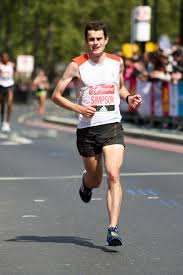
Adaptation is the human body wanting to get to homeostasis. Or what’s normal and useful. A great example of this, is the marathon runner. Size is the name of the game for these long distance runners. The body adapts to running marathons by getting rid of the stuff that makes them heavy. Fat and muscle. This adaptation becomes noticeable the more miles and years someone puts into marathon training.

Another of adaptation example is the golfer. I can’t think of the physical adaptation when it comes to golf. This would make for the occasional fat golfer. If you want to be “in shape”, golf is not a good choice.
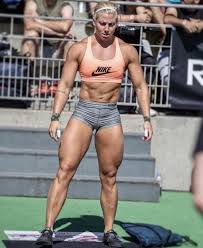
Adaptation is how the desired body composition is achieved. Mystery solved. To get the ideal body, find someone and ask what that person does as an activity. Do it long enough (years), for adaptation to kick in, and WalLah, you have adapted. Desired body achieved.
We are almost on to soreness. But I want to wrap up adaptation and skill in a neat little package first. Stay with me.
The best of both worlds. And what I am currently lifting
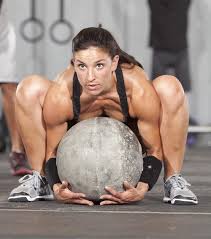
I owned and operated a Crossfit gym for many years until I sold it in November 2019. And being out of that world has given me the chance to step back and look at the big fitness picture. What I have concluded (as of this writing), one of the best fitness tools, is a large cement ball called an atlas stone.
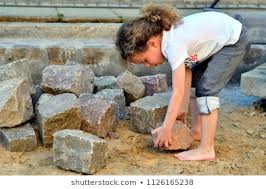
Skill – I can teach anyone how to lift an atlas stone in 5 minutes. I would start with a small stone. The stone would be just heavy enough to provide proper feedback. Then, once the current weight is understood and lifted, move to a heavier stone. Repeat this over and over again. Forever.
Adaptation to the stone – First, the favorable adaptation. To be able to lift a big heavy ball, requires the body to be robust. Bones, muscle and connective tissue (fascia, ligaments and tendons), grow and strengthen.
Now, the less favorable adaptation. The body doesn’t need to be light in order to lift an atlas stone. So the body will hold on to fat, as well as muscle. How much fat? As much fat as needed to adapt to the movement. This is where nutrition comes in. The best way to keep fat at bay is with a low sugar diet. But that’s for another post.
Soreness – Let soreness be your guide
First, let me say, soreness is not good. If you are sore, you worked out more than you should have.
Okay, you have picked the fitness activity you can learn and adapt to. How much do you perform the activity? Answer – Do the least amount of the activity necessary to achieve the greatest result. Why do more?
If you are sore the day after your workout, you did too much. You pushed your body beyond the point of improvement and adaptation. Take a few days off and try again. What you are looking for is increased adaptation without the soreness. Now you might be asking – okay, how do I know if I’m getting a good workout? Adaptation is the answer.
Keep track of your workouts
You picked lifting stones as your activity of choice and it’s day one. With note book in hand, you write – lifted 50# stone, one time. Day 2 – lifted 50# stone, three times. Day 3 – lifted 50# stone five times. Day 4 – lifted 50# stone six times. Day 5 – Back and legs sore. Back off reps. I’ll start again when soreness has subsided. Day 6 – still sore. Day 7 – lifted 50# stone four times Day 8 – lifted 50# stone six times Day 9 – Not sore! Bam! Adaptation baby! Day 9 – lifted 65# stone, once.
And so it continues. Over time the reps don’t get very high (no more than five or so) but the weight keeps going up. It keeps going up until as an advanced lifter, many years later, you reach your limit. You are learning and adapting and not using soreness as a metric.
Great Job! Now go lift something heavy.
 Author Site
Among the most beautiful I have ever read.
LikeLike