My caveman compass
I have a compass. It’s not an actual compass. It’s an imaginary compass. I call it my caveman compass. I use it to help me make decisions. Here is an example: It’s dinner time and I’m torn between the steak and the sweet potato casserole. I close my eyes and see my caveman compass. What would caveman David eat? Meat. But this post is not about food. It’s about bones. Keep reading.
A caveman workout
I’m going to take a wild guess and say our cave dwelling ancestors didn’t workout. Food was scarce and they couldn’t waste calories on anything other than the three f’s: food, family and fornicating.
Fast-forward to 2020 and food is abundant. No more hunting and no more gathering. Now we burn calories for fun. A paradox wrapped in an enigma.
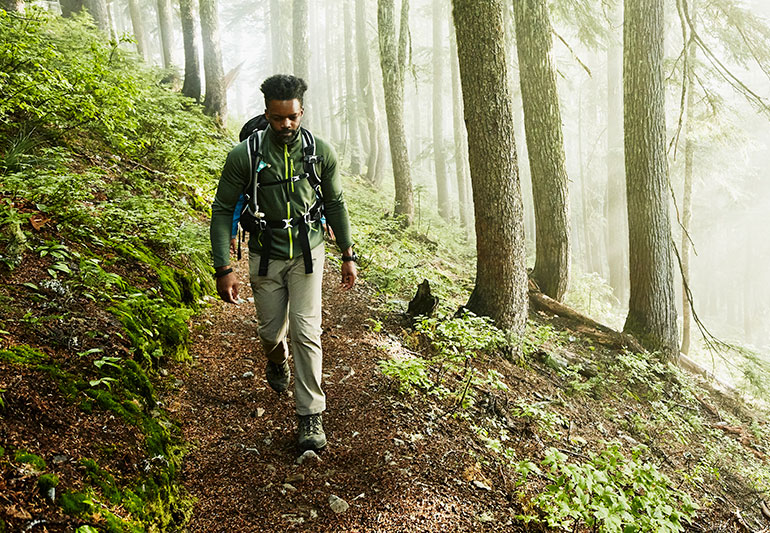
So we workout. We go to the gym. We run on our street and hike in nearby woods. Something deep inside ourselves tells us to move around and lift stuff. Maybe it’s that old friend DNA.
But something isn’t right. We are getting injured. Our knees and backs hurt and our rotator cuffs are tearing. What’s going on here? Look at your inner caveman compass for the answer.
A history of exercise machines
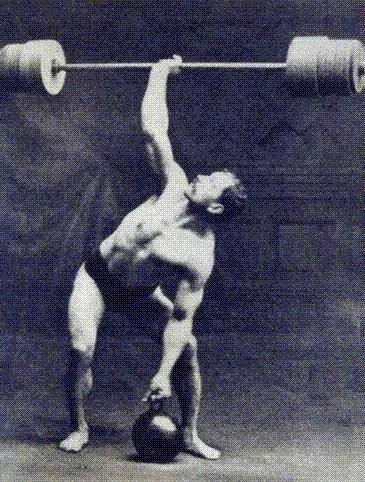
Using calories for non-survival reasons is brand new. There wasn’t an exercise machine until the 1970’s. The same time Arnold was winning his Mr. Olympia titles. Causing a rather obscure fitness competition into the main stream. Which happened to coincide with the birth of the modern health club in the 1970’s.
Exercise machines were invented to make fitness and weight lifting accessible to the average Jane and Joe. And one could only imagine the sales pitch, “This magnificent magic muscle machine can defy the laws of physics.” “In only 5 minutes a day you will look and feel thirty years younger.” And we bought it. As the 80’s hit us, we saw the birth of the massive fitness chains like 24 Hour Fitness and LA Fitness.
Jimmy the Gym Rat
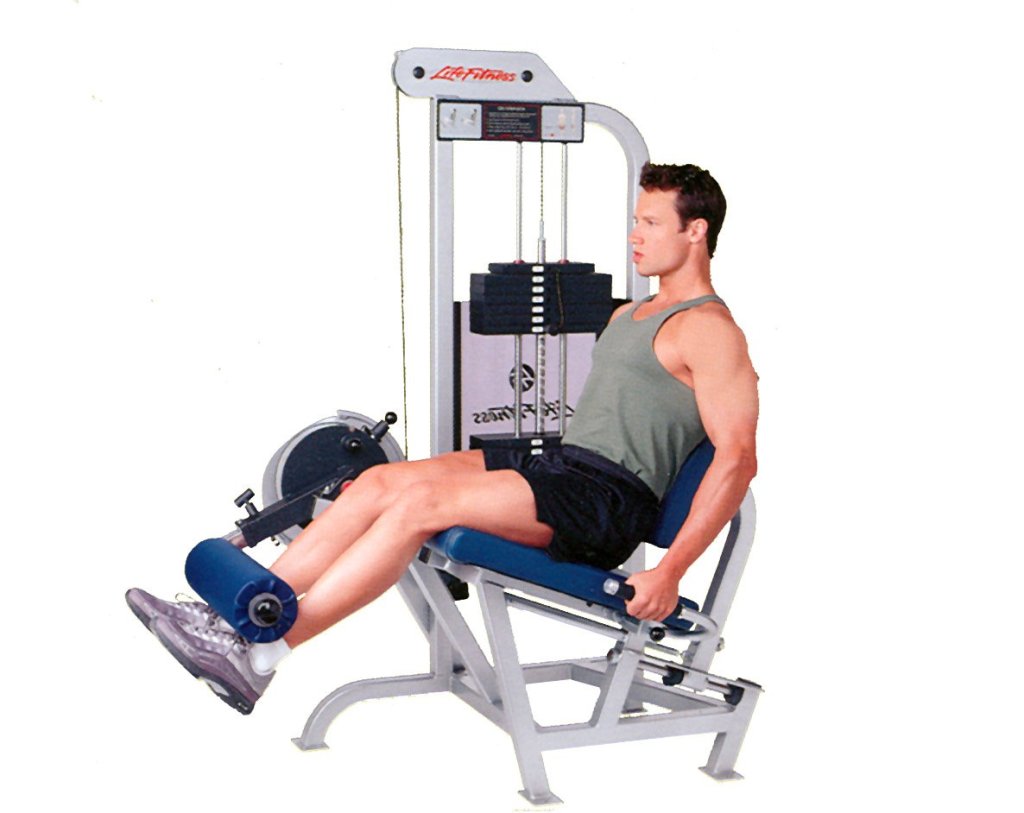
Let’s take a peek inside one of these gyms. You drive to the gym and look for the closet parking spot. Turn off the vehicle and gather your gym gear. Upon entering the gym, you see Jimmy the Gym Rat. Let’s see what he is up to.
It is leg day and his first set is on the knee extension machine. First muscle—quads. Got to blast the quads. Taking a seat he picks a weight and gets to work. He then proceeds to move from one machine to the other, working only one muscle at a time. While all the surrounding muscles rest. But that is okay, there is a machine for that muscle too. He is pumped and feeling good. Awesome work Jimmy.
But wait. Is this how we naturally move? When do we ever move only one muscle at a time? And when are we lifting something and sitting at the same time? My caveman compass points to never. I don’t picture caveman David ever moving this way. Exercise machines move one joint at a time. This puts enormous strain on the joint and on the muscle moving the joint. This leads to skeletal imbalances and overuse injuries. You would be better off not using the machines at all.
Do it for the bones
I want to offer a different way to think about exercise. Most people think of exercise from the outside in. Try this: to get the maximum benefit from exercise, think in terms of the inside out. Starting with the skeleton.
When we lift something heavy, bones bend under the pressure. This triggers cells called osteoblasts. Osteoblasts secrete the matrix proteins for bone formation. The result is bone remodeling and strengthening.
A lot of us have family members who are reaching or currently in their golden years. What is a fear the elderly have? Falling. The best workout for these silver sneakers is weight lifting with free weights. Ditch the machines a lift something heavy. While standing up. The way we are supposed to move.
What the pros are doing
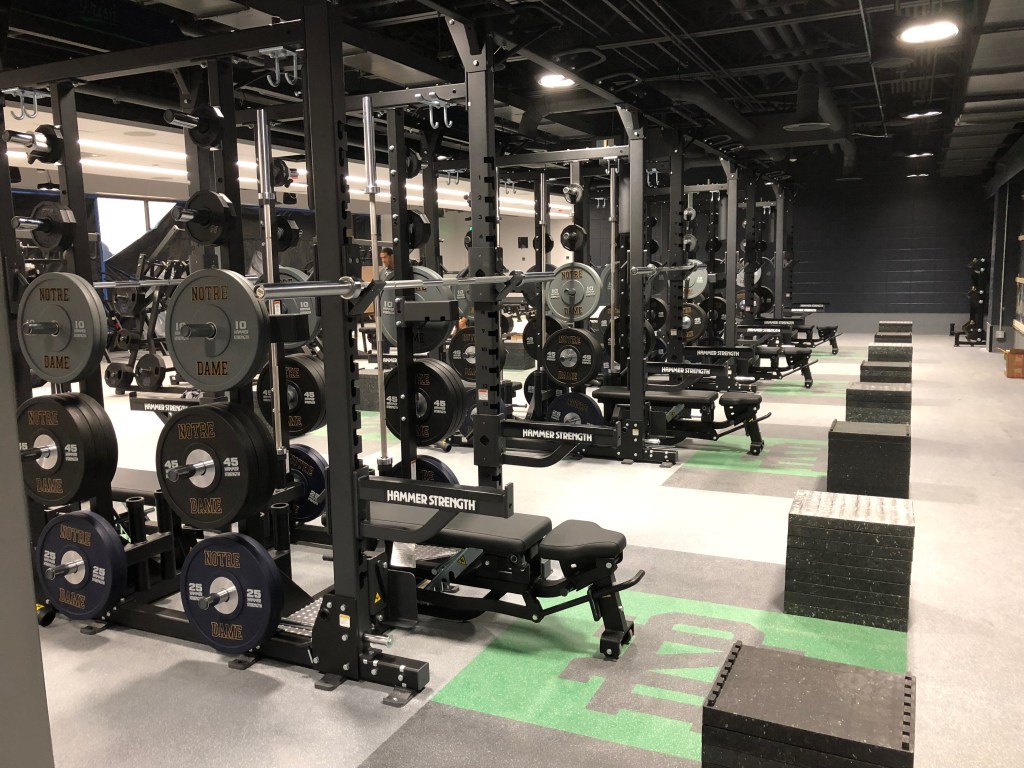
I looked at college and professional football weight rooms. It seems they are starting to get the hint. I see no machines. Mostly squat racks, barbells and bumper plates. All free weights. What do they know that we don’t? They understand the way humans move and how weight is carried.
Okay, we are not all collegiate football players, but we all need to live and move around. And do it forever with minimal bumps a bruises along the way.
Free weights are the best and most convenient way to improve strength and bone health.
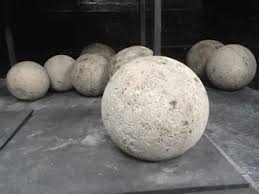
I workout at home. My entire gym consists of a set of dumbbells—70’s and under (thanks brother), a pull-up bar and an atlas stone. The atlas stone weighs 145 lbs. Most of my workouts involve lifting heavy. Not too many reps. I go until I see and feel a dip in performance. I work out once a day in the morning. Every day of the week. In about fifteen minutes I give my bones what they need to bend and grow stronger.
2 Takeaway ideas to wrap this up
Free weights are in
Ditch the machines and make free weights the center of your workout. You are never too old or too out of shape to use free weights. Free weights are safe, and work in harmony with our biology. We are designed to pick stuff up and put it down. WHILE STANDING.
Think of bones first and muscles second
When you are lifting your free weights, think of your skeleton and not your muscles. Strong healthy muscles are important, but to navigate life, a strong skeleton is the way to go. And the best way to build your skeleton is by standing up and lifting heavy things.
Remember, your body knows what to do. It wants to do the same thing our ancient ancestors did hundreds of thousands of years ago. All you need to do is get out of its way.
Happy Lifting
David
 Author Site